Original Raspberry Pi 5 Single Board Computer Model Pi5 4GB
Original Raspberry Pi 5 Single Board Computer Model Pi5 4GB
In stock
-
All orders are dispatched the next 3 business days!
-
We will beat any price. We back all products with a 1 year guarantee.
Order in the next 0 hours 0 minutes to get it by /09/2026
Couldn't load pickup availability
Guaranteed Safe Checkout
-
Mainboard Only:
-
Raspberry Pi 5 Single Board Computer (4GB RAM)
-
Features and Specs:
-
Processor:
-
Broadcom BCM2712
-
64-bit ARMCortex-A76(ARMv8-A ISA)
-
Quad-core
-
16nm ProcessorSoC
-
Clocked @2.4GHz
-
64KB I and D caches
-
512KB pre-core L2 cachesand a2MB shared L3 cache
-
With a metal body for better heat dissipation
-
-
SDRAM:
-
LPDDR4X-4267
-
8GBand4GBvariants are available at the announcement
-
-
2 x USB3.0 Port,capable ofsimultaneous 5Gbps
-
2 x USB2.0 Port
-
VideoCore:VII GPU, clocked at800MHz,supportingOpenGL ES 3.1,Vulkan 1.2
-
Dual micro-HDMI port, support true2x4Kp60 with HDR support
-
4Kp60 HEVC decoder
-
Image/Camera input:2 x 4-lane MIPI22-way CSI/DSI port, support either:
-
2 x Camera
-
2 x Display
-
1 x Camera + 1 x Display
-
-
Storage:
-
MicroSD slot, with support for high-speedSDR104 mode
-
Optional interface viaPCIe socket, supporting high-speed devices, for example:NVMe SSD
-
-
Gigabit Ethernet, with PoE+ HATsupport (require a new PoE+ HAT for Raspberry Pi 5)
-
Wireless:2.4GHz and 5GHzIEEE 802.11.b/g/n/ac wireless LAN,Bluetooth 5.0and BLE (Bluetooth Low Energy)
-
PCIe 2.0 x 1 interfacefor fast peripherals, for example, NVMe SSD (requires compatible HAT)
-
DedicatedUART debug port, independent from 40-pin GPIO. Always Enabled
-
DedicatedFan port for cooling fan, PWM, and Tachometer feedback ready, independent from 40-pin GPIO
-
Expanded 40-pin GPIO Header
-
Low-Level Peripherals:
-
27 x GPIO
-
UART
-
I2C bus
-
SPI bus with two chip selects
-
+3.3V
-
+5V
-
Ground
-
-
Newly integratedRTConPMIC(Power Management IC), withconnector for rechargeable coin cell battery
-
Power Button(for proper shutdown, reset, or wakeup)
-
Power Requirement:5V/5.0AviaUSB type Cconnector, withPD(Power Delivery) support.
-
Bootable with the latestRaspberry Pi OS Bookworm ONLY, and check 3rd party Operating System (Coming soon)
-
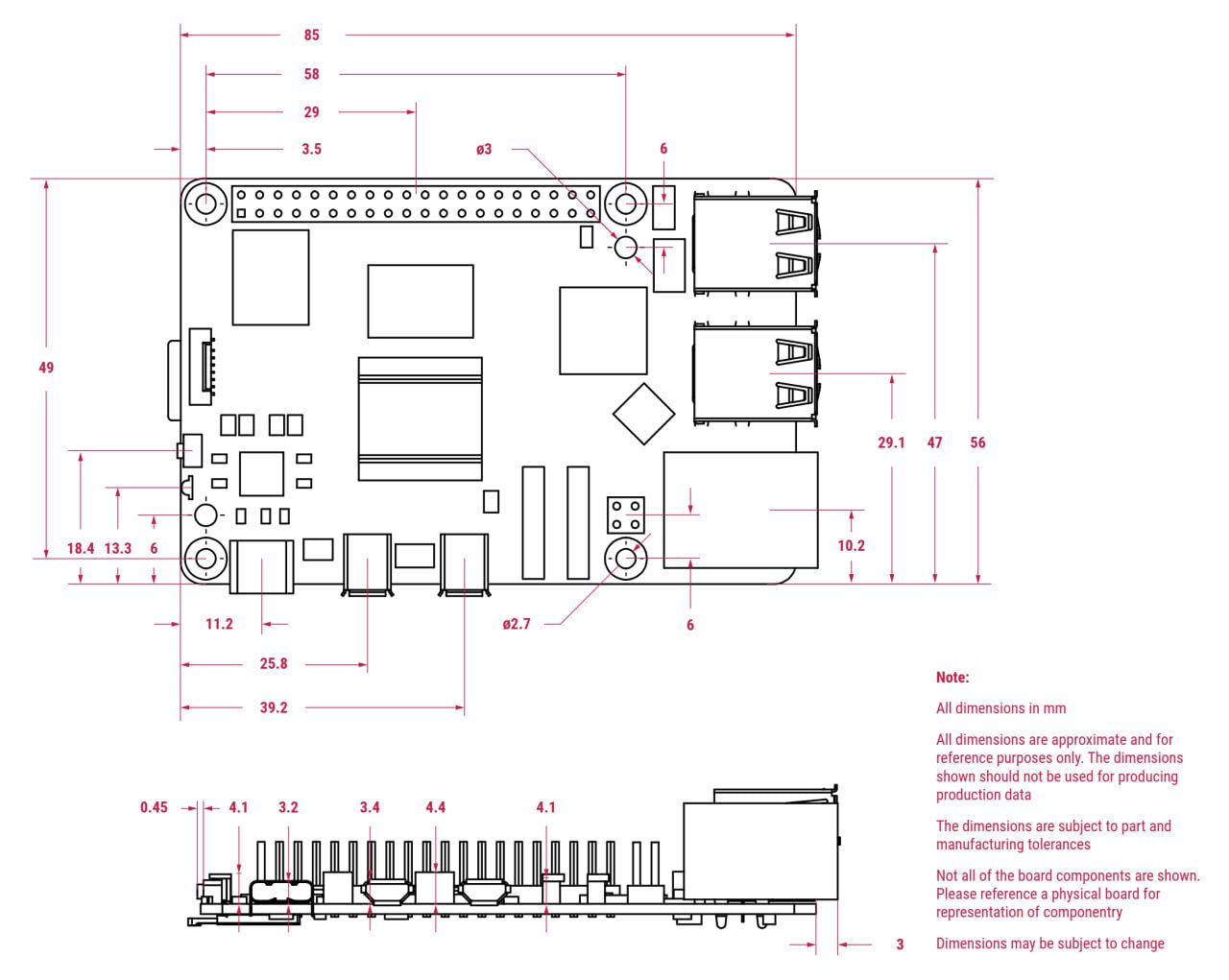
Dimensions: 88mm x 56mm x 17mm
Note:Only 8GB and 4GB variants will be available during the announcement. The 2GB and 1GB variantsMAYbe released end of 2024.
Note:Please click "NOTIFY ME" and enter youremail addressto get an email notification once there is ready stock.
The Most Powerful Raspberry Pi Computer - Raspberry Pi 5
What is a Raspberry Pi?
Raspberry Pi is a single-board computer developed by the Raspberry Pi Foundation in the UK to promote the teaching of basic computer science in schools and developing countries. Raspberry Pi has become a very reliable microcomputer even outside of the education field. Science and engineering, IT, and even industries have been using Raspberry Pi in their system, in conjunction with IR4.0.
Raspberry Pi boards act like almost your typical standard PC but in a more compact form factor! It has CPU, GPU, RAM, HDMI and USB Ports, wireless and wired connectivity, Camera interfaces, and a microSD slot. Plus. Besides, it also has General Purpose Input/Output (GPIO) Pins that you can use to connect with other components, turning your cute single-board computer into the brain of your prototype, systems, or even robots!
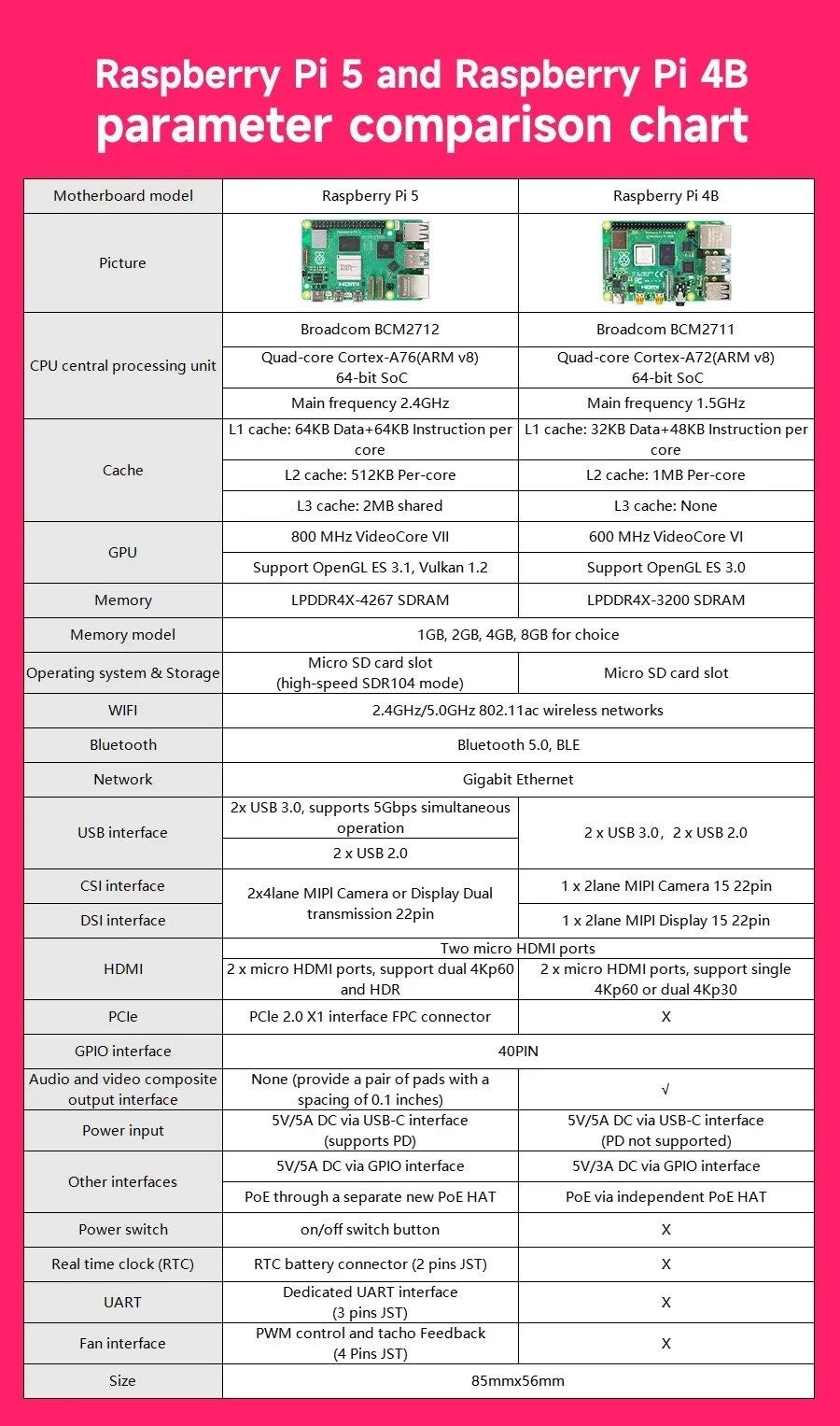
With the new Raspberry Pi 5, there is a lot of improvement compared to its previous siblings. This opens up more possibilities for what you can do with your Raspberry Pi board. Here is the comparison table between Raspberry Pi 5 vs Raspberry Pi 4 Model B.
Raspberry Pi 5 Highlights
Faster CPU, GPU, and RAM
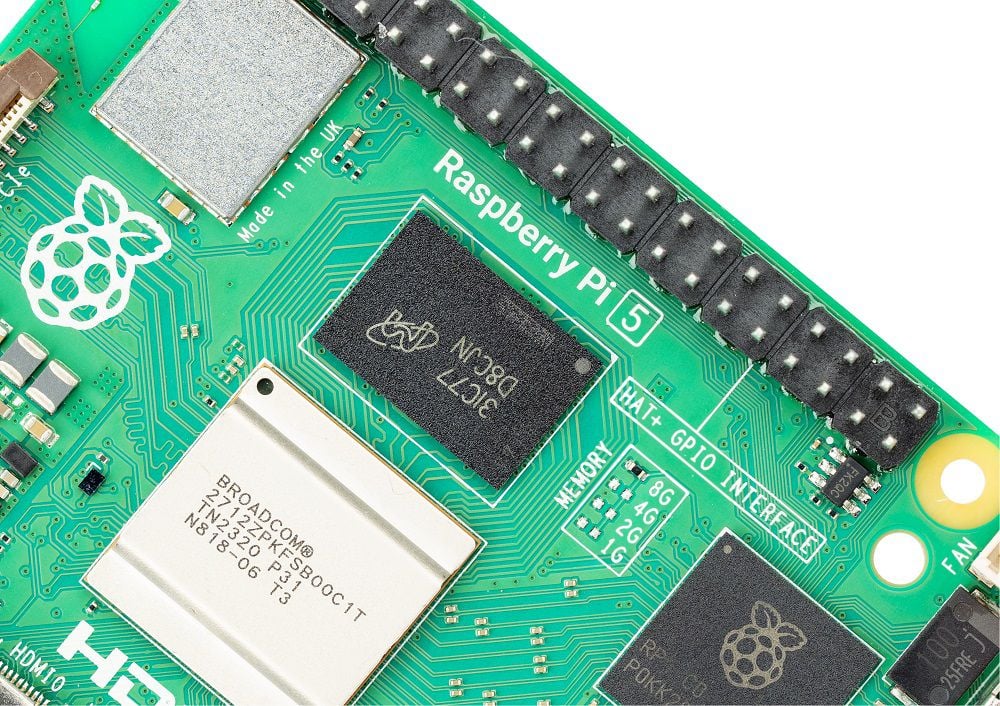
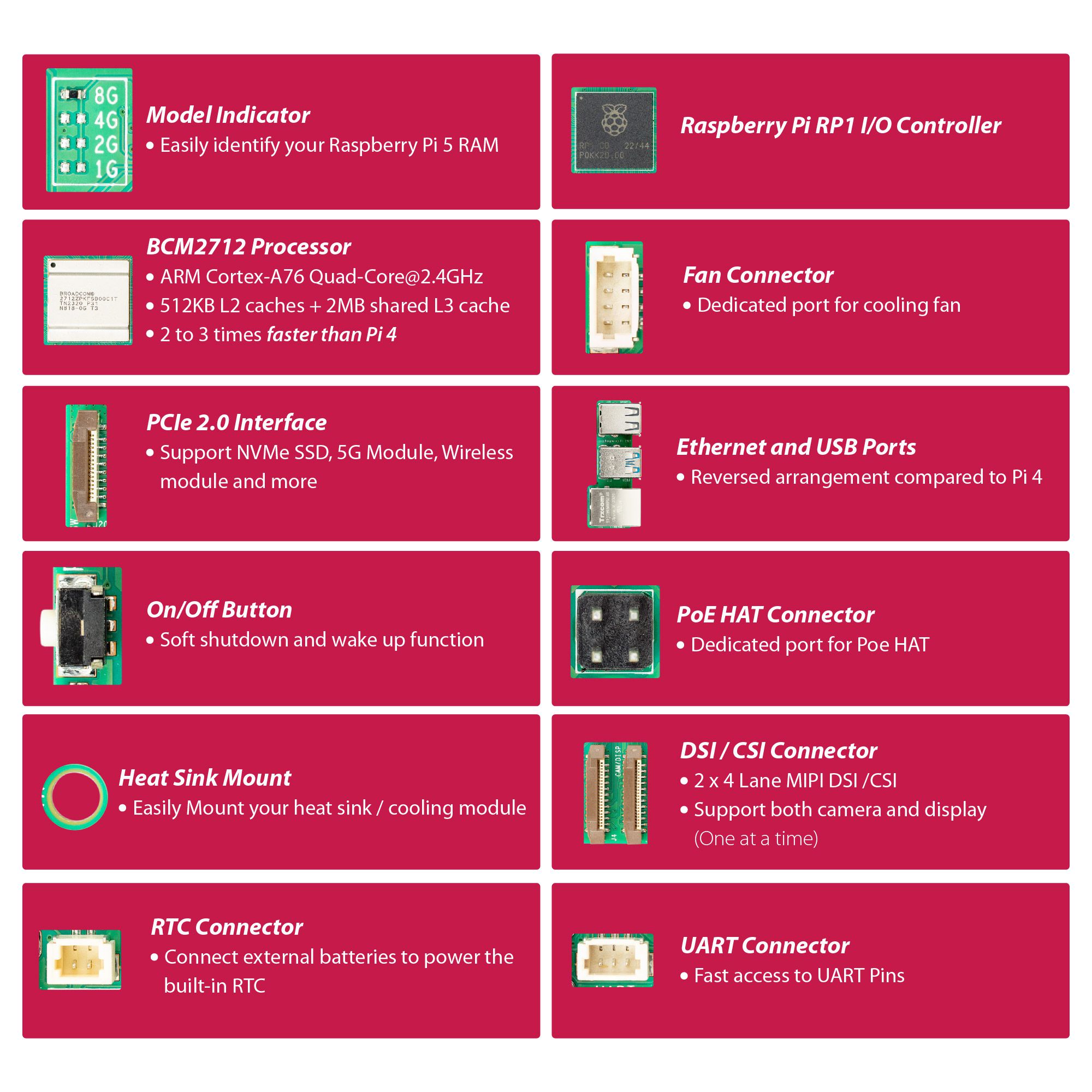
Equipped withARM Cortex-A76 CPUclocked at2.4GHz, andVideoCore VIIGPU clocked at800MHz. These increase the performance up to2 to 3 times fasterthanRaspberry Pi 4 Model B! Raspberry Pi 5 could be a better option for your project that requires high-speed processing power like AI (Artificial Intelligence) programs, or intensive graphical rendering. Raspberry Pi 5 is designed to accommodate 8GB, 4GB, 2GB, or 1GB ofLPDDR4X-4267RAM options (However, only 8GB and 4GB RAM options are available during launch). It even has theRAM size indicatoron the board, so you don’t have to think anymore about how much RAM your Raspberry Pi has!
Note:Only 8GB and 4GB variants will be available during the announcement. The 2GB and 1GB variantsMAYbe released end of 2024.
Better USB 3.0
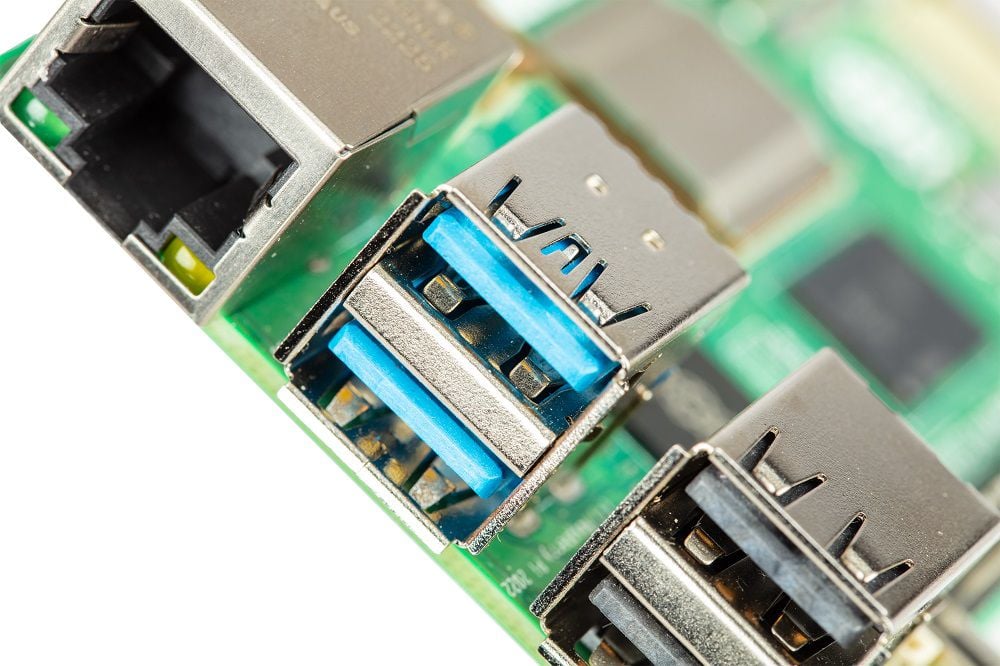
Similar to Raspberry Pi 4 Model B, the Raspberry Pi 5 comes with two USB 3.0, which is much faster than USB 2.0. Perfect for any fast device connection like external SSD or flash drives. Two USB 2.0 are also included for you to use with simple peripherals like keyboards and mice. with the RP1 IO Controller (The silicon designed in-house by Raspberry Pi), there is a "southbridge" on Raspberry Pi 5. The RP1 has two USB 3 controllers which are dedicated to taking 1 x USB3.0 port and another USB2.0 port respectively. The USB 3.0 port on Raspberry Pi 5 supports5Gbps data transfer simultaneously! You can now use TWO fast USB drives or SSDs, and have them operate at a high speed, on both USB 3.0 ports simultaneously!
2 x 4-lane MIPI ports (CSI/DSI)
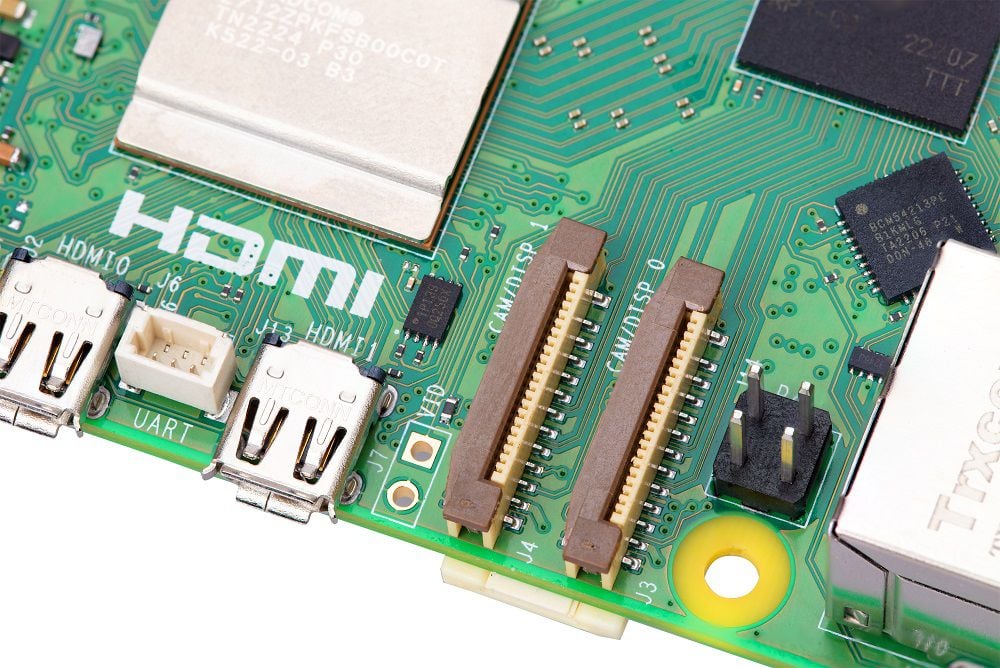
The new2 x 4 lane MIPI port, supports both DSI (Display) and CSI (Camera) at the time, at either port. On Raspberry Pi 5, you could have 2 cameras, or 2 DSI displays at the same time, with better performance! However, you will need an adapter FPC/FFC for the camera and display, the FFC that comes with most of the camera module or display cannot fit into the new compact 22-way CSI/DSI socket. Not to worry, we are launching those FPC/FFC cables soon.
Supports Higher Power Input
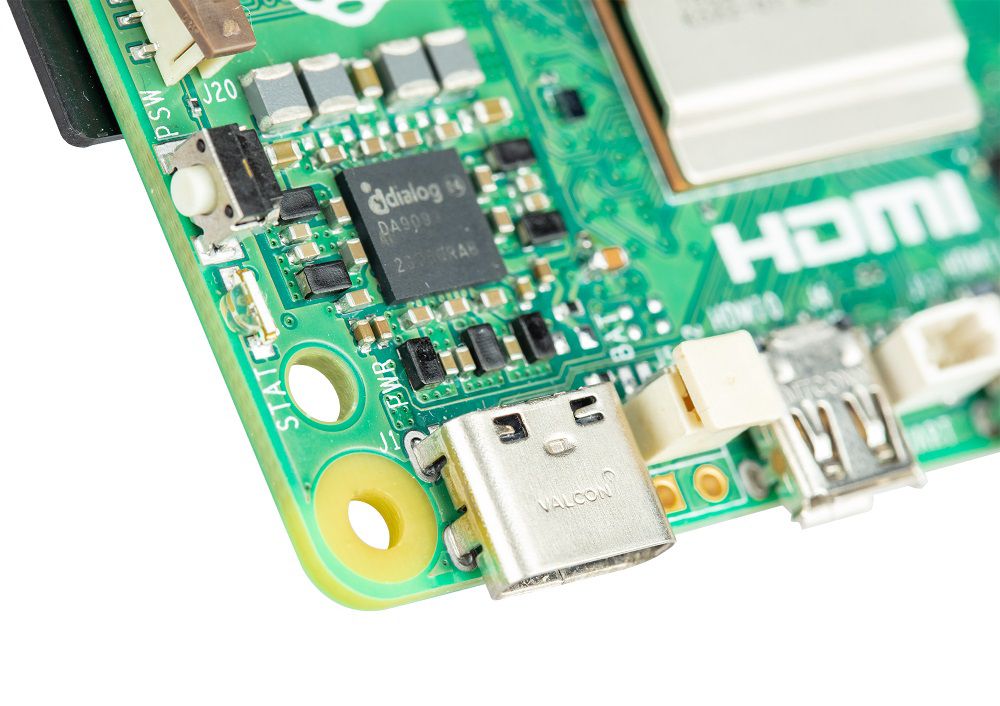
Raspberry Pi 5 can supportup to 5V at 5Apower supply through the USB Type C connection, with a specialPD (Power Delivery) PSU. If you are planning to use the Raspberry Pi 5 for a high-power project, you may consider getting theofficial 27W USB-C PD PSUfrom Raspberry Pi for this new computer :) The new PD PSU can deliver 5V@5A and also support standard PD modes of 5V@3A, 9V@3A, 12V@2.25A, and 15V@1.8A. On the other hand, Raspberry Pi 5 can still be powered up with PSU for Raspberry Pi 4 Model B, or the normal USB-C PSU. With a normal USB-C PD or non-PD PSU, the Raspberry Pi 5 can only provide up to 600mA to each USB 3.0 port because the Raspberry Pi 5 will auto-detect the PSU as standard and limit the current supply accordingly. If the Raspberry Pi 5 is powered with the official 27W PD PSU, it will enable higher power to USB 3.0, up to 1.6A.
Power Button
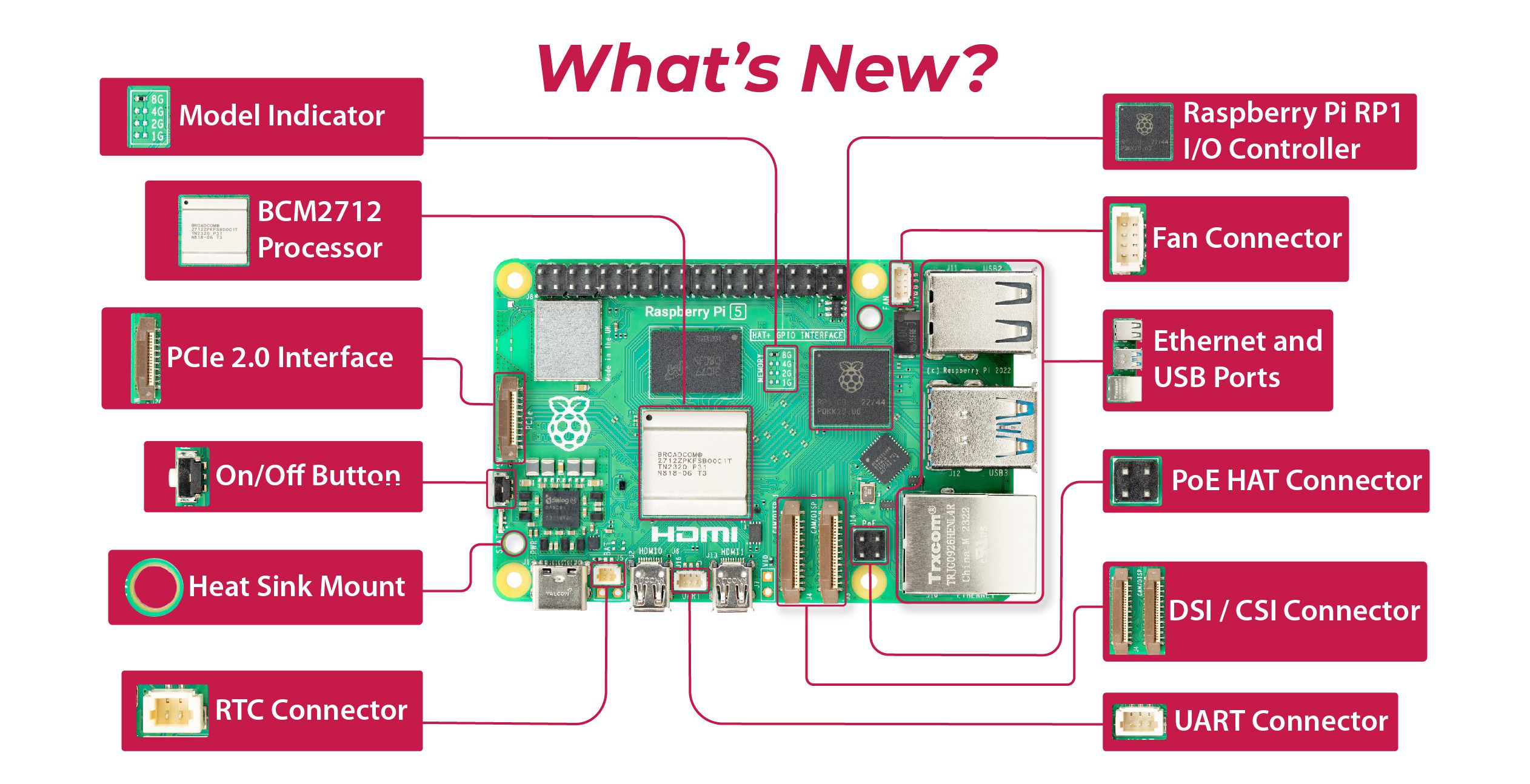
This is a long-awaited feature by the users :) The Raspberry Pi 5 now comes with an on-boardPower Button! You can safely turn on and off your Raspberry Pi 5 with a press of a button, without touching the power supply plug, just like a normal laptop or PC.
Dedicated RTC and Battery Port
The Raspberry Pi 5 has a custom-designed Power Management IC (PMIC). Besides supporting higher power management, it also comes with a built-inRTC (Real Time Clock). To utilize the RTC, it needs to be powered with anexternal battery. Raspberry Pi 5 comes with a dedicated battery port. With the battery, the RTC will keep the clock counting when the Raspberry Pi 5 is turned off and even power off, thus keeping all your time-related projects stable and reliable.
Dedicated UART Communication Port
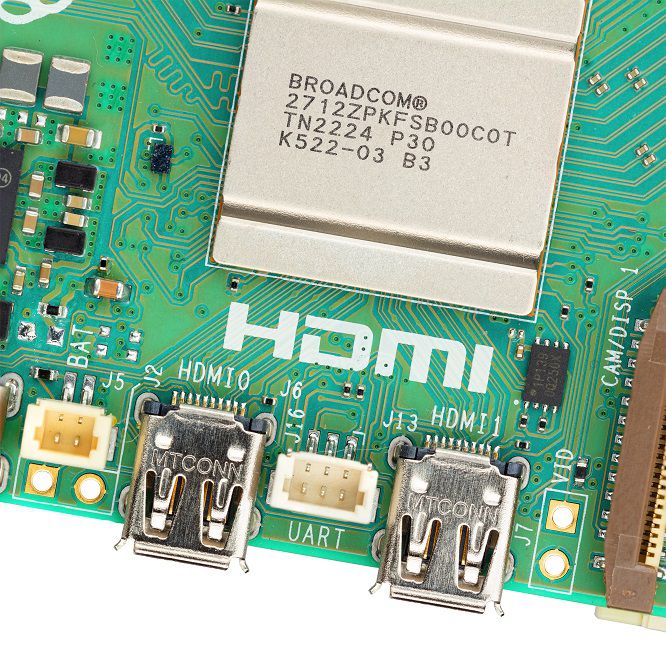
You are also provided with a built-indedicated UART port. You could use this for any UART communication device that you need. This UART port also supports debug mode. The UART debug mode is always enabled by default so you don't need to worry about needing to enable it in the terminal under the configuration file. This UART port has its dedicated pin and is independent of the UART pins on the 40-pin GPIO. The port is compatible with theRaspberry Pi Debug Probe.
Dedicated Fan Port
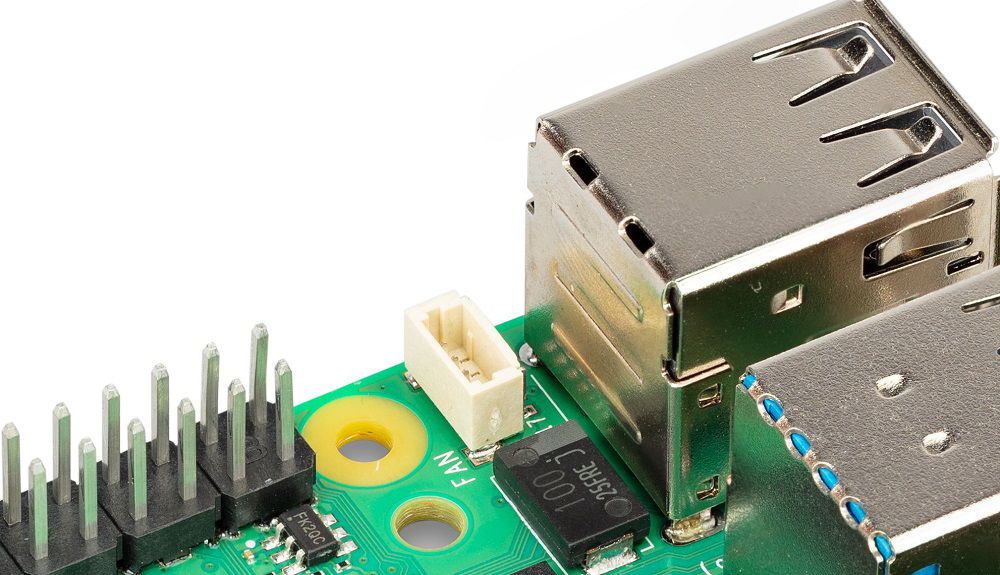
Is simple Physics, higher power will generate more heat. The same applied to the Raspberry Pi 5, good thermal management is needed. To ease the installation of a cooling fan, Raspberry Pi 5 comes with adedicated Fan connector. The fan port will provide power, PWM control, and Tachometer feedback from the cooling fan. It is plug-and-play with the Official Raspberry Pi 5 Case and Active Cooler. Just use the latest Raspberry Pi OS (Bookworm) and the fan is automatically triggered with speed control to cool the board down. The fan control and feedback pins arededicated and independent from the 40-pin GPIO. This allows users to still utilize the 40-pin GPIO even when there is a cooling fan installed.
There are already two official fans/coolers that are designed for this port. Get theOfficial Raspberry Pi 5 Case that has a built-in fanor theofficial heatsink and Active coolerto keep your Raspberry Pi 5 cool :)
Extended 1 x PCIe Gen 2 Port
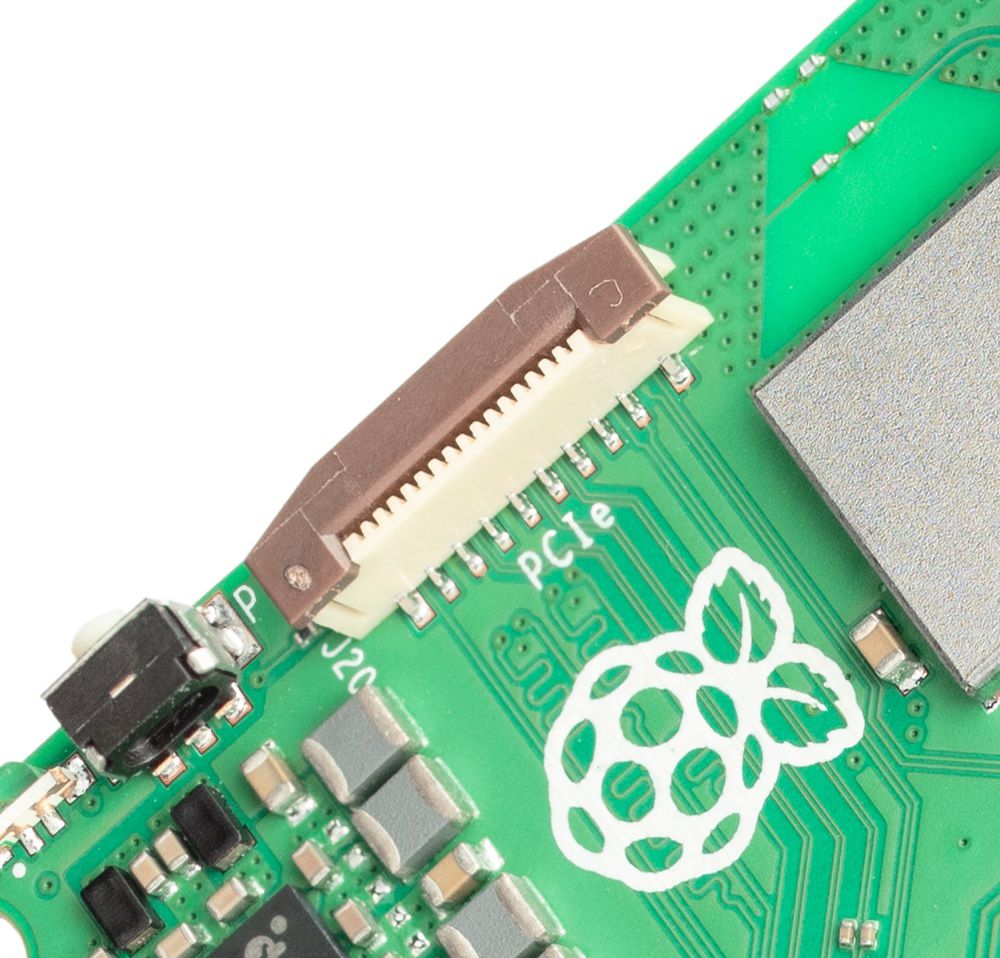
A 16-pin 0.5mm FFC connector replaces the DSI port on Raspberry Pi 5, extending the single-lane PICe Gen 2 bus. It supports high-speed devices such as NVMe SSD, Network Card, or Graphic card. There will be an M.2 (M-Key) HAT from Raspberry Pi soon.
Check out what Jeff Geerling has to say about the PCIe socket on Raspberry Pi 5:
Can I use Raspberry Pi 4 Model B Accessories?
But wait, what if you already have Raspberry Pi 4 Model B and all of the PSU, casing, and accessories? Can you use that for Raspberry Pi 5?
Don’t worry, Raspberry Pi 5 is almost the same as the Raspberry Pi 4 Model B that you are familiar with. Of course with upgrades, there are changes, for the better!
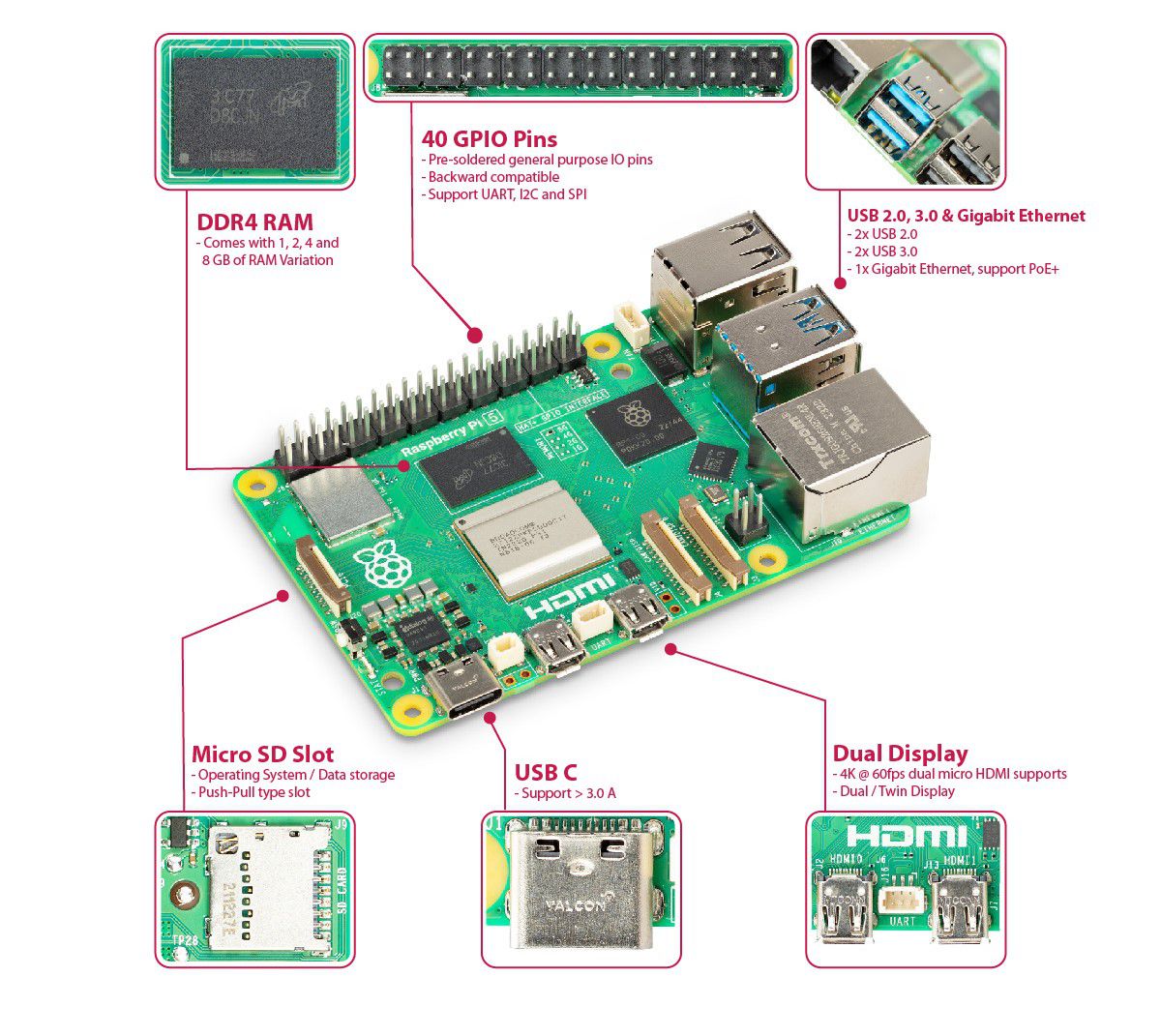
You can still use your previous accessories:
-
micro HDMI to full-size (standard) HDMI cable as Raspberry Pi 5 comes with the same micro HDMI ports.
-
USB Type C Power Supply. But do note that you will need a 5V@5A PD (Power Delivery) power supply to get the full performance out of the Raspberry Pi 5.
-
Most of the HAT utilizes the 40-pin GPIO headers. Raspberry Pi 5 has the same GPIO with backward compatibility. But for certain HAT, you might need to raise the GPIO using a GPIO extender like our PC104 Header Pin. This is because an active cooler is needed to ensure the new powerful CPU can operate at optimum temperature, thus the extra space is required above the CPU.
-
Of course, USB devices such as keyboards, mice, and webcams are quite standard and are compatible.
-
Not to forget the Ethernet Cable, those are quite standard too.
However, as the performance improvement being made on the Raspberry Pi 5, some of the features from Raspberry Pi 4 has been upgraded and are incompatible with the Raspberry Pi 5:
-
Most of the Raspberry Pi 4 Model B casings/enclosures. This is mainly due to:
-
The position of the USB and Ethernet ports, they are swapped
-
The position changes of the PoE header pins, thus the older PoE+ HAT for Raspberry Pi 3 Model B+ and Raspberry Pi 4 Model B is NOT compatible with Raspberry Pi 5. The new PoE+ HAT for Raspberry Pi 5 will be coming soon.
-
The new power button, most of the cases/enclosures do not have access to this button.
-
The additional DSI/CSI ports, which replace the 3.5mm Audio/Video jack
-
-
For full performance, you need to use the recommended 5V 5A power supply with PD support.
-
Currently, Raspberry Pi 5 is only compatible with thenew Raspberry Pi OS Bookworm(Releasing Mid-October 2023). It will not be able to operate using any of the older versions of Raspberry Pi OS. Get the newMakerDisk microSD Card pre-loaded with Raspberry Pi OS Bookworm, which you can use out of the box!
FAQ for Raspberry Pi 5
-
Can I use Raspberry Pi OS (Buster or Bullseye) older versions of Raspberry Pi OS work with Raspberry Pi 5?Answer: You will need thelatest version of Raspberry Pi OS,Bookworm, for your Raspberry Pi 5. Bookworm will launch inmid-October 2023. You should be able to get it fromRaspberry Pi Imagerby the time this FAQ is written.
-
Will my Raspberry Pi 4 power supply work with Raspberry Pi 5?Answer: Theofficial Raspberry Pi 15W USB-C PSUfor Raspberry Pi 4can still power upthe Raspberry Pi 5. However, the Raspberry Pi 5 is a higher-performance computer than the Raspberry Pi 4, and you may have problems using an underpowered supply. We recommend theofficial 27W high-quality 5V 5A USB-C power supplyfor Raspberry Pi 5.
-
Will my Raspberry Pi 5 fit my Raspberry Pi 4 case?Answer: Raspberry Pi 5won't fit the Raspberry Pi 4 Case. We recommend the Raspberry Pi Case for Raspberry Pi 5, designed to help you get the most out of our newest computer.
-
Does Raspberry Pi 5 need active cooling?Answer: Raspberry Pi 5 is faster and more powerful than prior-generation Raspberry Pis, and like most general-purpose computers, it will perform best withactive cooling. TheRaspberry Pi Case for Raspberry Pi 5, with its integrated fan, is one way to provide this.
Description
Description
-
Mainboard Only:
-
Raspberry Pi 5 Single Board Computer (4GB RAM)
-
Features and Specs:
-
Processor:
-
Broadcom BCM2712
-
64-bit ARMCortex-A76(ARMv8-A ISA)
-
Quad-core
-
16nm ProcessorSoC
-
Clocked @2.4GHz
-
64KB I and D caches
-
512KB pre-core L2 cachesand a2MB shared L3 cache
-
With a metal body for better heat dissipation
-
-
SDRAM:
-
LPDDR4X-4267
-
8GBand4GBvariants are available at the announcement
-
-
2 x USB3.0 Port,capable ofsimultaneous 5Gbps
-
2 x USB2.0 Port
-
VideoCore:VII GPU, clocked at800MHz,supportingOpenGL ES 3.1,Vulkan 1.2
-
Dual micro-HDMI port, support true2x4Kp60 with HDR support
-
4Kp60 HEVC decoder
-
Image/Camera input:2 x 4-lane MIPI22-way CSI/DSI port, support either:
-
2 x Camera
-
2 x Display
-
1 x Camera + 1 x Display
-
-
Storage:
-
MicroSD slot, with support for high-speedSDR104 mode
-
Optional interface viaPCIe socket, supporting high-speed devices, for example:NVMe SSD
-
-
Gigabit Ethernet, with PoE+ HATsupport (require a new PoE+ HAT for Raspberry Pi 5)
-
Wireless:2.4GHz and 5GHzIEEE 802.11.b/g/n/ac wireless LAN,Bluetooth 5.0and BLE (Bluetooth Low Energy)
-
PCIe 2.0 x 1 interfacefor fast peripherals, for example, NVMe SSD (requires compatible HAT)
-
DedicatedUART debug port, independent from 40-pin GPIO. Always Enabled
-
DedicatedFan port for cooling fan, PWM, and Tachometer feedback ready, independent from 40-pin GPIO
-
Expanded 40-pin GPIO Header
-
Low-Level Peripherals:
-
27 x GPIO
-
UART
-
I2C bus
-
SPI bus with two chip selects
-
+3.3V
-
+5V
-
Ground
-
-
Newly integratedRTConPMIC(Power Management IC), withconnector for rechargeable coin cell battery
-
Power Button(for proper shutdown, reset, or wakeup)
-
Power Requirement:5V/5.0AviaUSB type Cconnector, withPD(Power Delivery) support.
-
Bootable with the latestRaspberry Pi OS Bookworm ONLY, and check 3rd party Operating System (Coming soon)
-
Dimensions: 88mm x 56mm x 17mm
Note:Only 8GB and 4GB variants will be available during the announcement. The 2GB and 1GB variantsMAYbe released end of 2024.
Note:Please click "NOTIFY ME" and enter youremail addressto get an email notification once there is ready stock.
The Most Powerful Raspberry Pi Computer - Raspberry Pi 5
What is a Raspberry Pi?
Raspberry Pi is a single-board computer developed by the Raspberry Pi Foundation in the UK to promote the teaching of basic computer science in schools and developing countries. Raspberry Pi has become a very reliable microcomputer even outside of the education field. Science and engineering, IT, and even industries have been using Raspberry Pi in their system, in conjunction with IR4.0.
Raspberry Pi boards act like almost your typical standard PC but in a more compact form factor! It has CPU, GPU, RAM, HDMI and USB Ports, wireless and wired connectivity, Camera interfaces, and a microSD slot. Plus. Besides, it also has General Purpose Input/Output (GPIO) Pins that you can use to connect with other components, turning your cute single-board computer into the brain of your prototype, systems, or even robots!
With the new Raspberry Pi 5, there is a lot of improvement compared to its previous siblings. This opens up more possibilities for what you can do with your Raspberry Pi board. Here is the comparison table between Raspberry Pi 5 vs Raspberry Pi 4 Model B.
Raspberry Pi 5 Highlights
Faster CPU, GPU, and RAM
Equipped withARM Cortex-A76 CPUclocked at2.4GHz, andVideoCore VIIGPU clocked at800MHz. These increase the performance up to2 to 3 times fasterthanRaspberry Pi 4 Model B! Raspberry Pi 5 could be a better option for your project that requires high-speed processing power like AI (Artificial Intelligence) programs, or intensive graphical rendering. Raspberry Pi 5 is designed to accommodate 8GB, 4GB, 2GB, or 1GB ofLPDDR4X-4267RAM options (However, only 8GB and 4GB RAM options are available during launch). It even has theRAM size indicatoron the board, so you don’t have to think anymore about how much RAM your Raspberry Pi has!
Note:Only 8GB and 4GB variants will be available during the announcement. The 2GB and 1GB variantsMAYbe released end of 2024.
Better USB 3.0
Similar to Raspberry Pi 4 Model B, the Raspberry Pi 5 comes with two USB 3.0, which is much faster than USB 2.0. Perfect for any fast device connection like external SSD or flash drives. Two USB 2.0 are also included for you to use with simple peripherals like keyboards and mice. with the RP1 IO Controller (The silicon designed in-house by Raspberry Pi), there is a "southbridge" on Raspberry Pi 5. The RP1 has two USB 3 controllers which are dedicated to taking 1 x USB3.0 port and another USB2.0 port respectively. The USB 3.0 port on Raspberry Pi 5 supports5Gbps data transfer simultaneously! You can now use TWO fast USB drives or SSDs, and have them operate at a high speed, on both USB 3.0 ports simultaneously!
2 x 4-lane MIPI ports (CSI/DSI)
The new2 x 4 lane MIPI port, supports both DSI (Display) and CSI (Camera) at the time, at either port. On Raspberry Pi 5, you could have 2 cameras, or 2 DSI displays at the same time, with better performance! However, you will need an adapter FPC/FFC for the camera and display, the FFC that comes with most of the camera module or display cannot fit into the new compact 22-way CSI/DSI socket. Not to worry, we are launching those FPC/FFC cables soon.
Supports Higher Power Input
Raspberry Pi 5 can supportup to 5V at 5Apower supply through the USB Type C connection, with a specialPD (Power Delivery) PSU. If you are planning to use the Raspberry Pi 5 for a high-power project, you may consider getting theofficial 27W USB-C PD PSUfrom Raspberry Pi for this new computer :) The new PD PSU can deliver 5V@5A and also support standard PD modes of 5V@3A, 9V@3A, 12V@2.25A, and 15V@1.8A. On the other hand, Raspberry Pi 5 can still be powered up with PSU for Raspberry Pi 4 Model B, or the normal USB-C PSU. With a normal USB-C PD or non-PD PSU, the Raspberry Pi 5 can only provide up to 600mA to each USB 3.0 port because the Raspberry Pi 5 will auto-detect the PSU as standard and limit the current supply accordingly. If the Raspberry Pi 5 is powered with the official 27W PD PSU, it will enable higher power to USB 3.0, up to 1.6A.
Power Button
This is a long-awaited feature by the users :) The Raspberry Pi 5 now comes with an on-boardPower Button! You can safely turn on and off your Raspberry Pi 5 with a press of a button, without touching the power supply plug, just like a normal laptop or PC.
Dedicated RTC and Battery Port
The Raspberry Pi 5 has a custom-designed Power Management IC (PMIC). Besides supporting higher power management, it also comes with a built-inRTC (Real Time Clock). To utilize the RTC, it needs to be powered with anexternal battery. Raspberry Pi 5 comes with a dedicated battery port. With the battery, the RTC will keep the clock counting when the Raspberry Pi 5 is turned off and even power off, thus keeping all your time-related projects stable and reliable.
Dedicated UART Communication Port
You are also provided with a built-indedicated UART port. You could use this for any UART communication device that you need. This UART port also supports debug mode. The UART debug mode is always enabled by default so you don't need to worry about needing to enable it in the terminal under the configuration file. This UART port has its dedicated pin and is independent of the UART pins on the 40-pin GPIO. The port is compatible with theRaspberry Pi Debug Probe.
Dedicated Fan Port
Is simple Physics, higher power will generate more heat. The same applied to the Raspberry Pi 5, good thermal management is needed. To ease the installation of a cooling fan, Raspberry Pi 5 comes with adedicated Fan connector. The fan port will provide power, PWM control, and Tachometer feedback from the cooling fan. It is plug-and-play with the Official Raspberry Pi 5 Case and Active Cooler. Just use the latest Raspberry Pi OS (Bookworm) and the fan is automatically triggered with speed control to cool the board down. The fan control and feedback pins arededicated and independent from the 40-pin GPIO. This allows users to still utilize the 40-pin GPIO even when there is a cooling fan installed.
There are already two official fans/coolers that are designed for this port. Get theOfficial Raspberry Pi 5 Case that has a built-in fanor theofficial heatsink and Active coolerto keep your Raspberry Pi 5 cool :)
Extended 1 x PCIe Gen 2 Port
A 16-pin 0.5mm FFC connector replaces the DSI port on Raspberry Pi 5, extending the single-lane PICe Gen 2 bus. It supports high-speed devices such as NVMe SSD, Network Card, or Graphic card. There will be an M.2 (M-Key) HAT from Raspberry Pi soon.
Check out what Jeff Geerling has to say about the PCIe socket on Raspberry Pi 5:
Can I use Raspberry Pi 4 Model B Accessories?
But wait, what if you already have Raspberry Pi 4 Model B and all of the PSU, casing, and accessories? Can you use that for Raspberry Pi 5?
Don’t worry, Raspberry Pi 5 is almost the same as the Raspberry Pi 4 Model B that you are familiar with. Of course with upgrades, there are changes, for the better!
You can still use your previous accessories:
-
micro HDMI to full-size (standard) HDMI cable as Raspberry Pi 5 comes with the same micro HDMI ports.
-
USB Type C Power Supply. But do note that you will need a 5V@5A PD (Power Delivery) power supply to get the full performance out of the Raspberry Pi 5.
-
Most of the HAT utilizes the 40-pin GPIO headers. Raspberry Pi 5 has the same GPIO with backward compatibility. But for certain HAT, you might need to raise the GPIO using a GPIO extender like our PC104 Header Pin. This is because an active cooler is needed to ensure the new powerful CPU can operate at optimum temperature, thus the extra space is required above the CPU.
-
Of course, USB devices such as keyboards, mice, and webcams are quite standard and are compatible.
-
Not to forget the Ethernet Cable, those are quite standard too.
However, as the performance improvement being made on the Raspberry Pi 5, some of the features from Raspberry Pi 4 has been upgraded and are incompatible with the Raspberry Pi 5:
-
Most of the Raspberry Pi 4 Model B casings/enclosures. This is mainly due to:
-
The position of the USB and Ethernet ports, they are swapped
-
The position changes of the PoE header pins, thus the older PoE+ HAT for Raspberry Pi 3 Model B+ and Raspberry Pi 4 Model B is NOT compatible with Raspberry Pi 5. The new PoE+ HAT for Raspberry Pi 5 will be coming soon.
-
The new power button, most of the cases/enclosures do not have access to this button.
-
The additional DSI/CSI ports, which replace the 3.5mm Audio/Video jack
-
-
For full performance, you need to use the recommended 5V 5A power supply with PD support.
-
Currently, Raspberry Pi 5 is only compatible with thenew Raspberry Pi OS Bookworm(Releasing Mid-October 2023). It will not be able to operate using any of the older versions of Raspberry Pi OS. Get the newMakerDisk microSD Card pre-loaded with Raspberry Pi OS Bookworm, which you can use out of the box!
FAQ for Raspberry Pi 5
-
Can I use Raspberry Pi OS (Buster or Bullseye) older versions of Raspberry Pi OS work with Raspberry Pi 5?Answer: You will need thelatest version of Raspberry Pi OS,Bookworm, for your Raspberry Pi 5. Bookworm will launch inmid-October 2023. You should be able to get it fromRaspberry Pi Imagerby the time this FAQ is written.
-
Will my Raspberry Pi 4 power supply work with Raspberry Pi 5?Answer: Theofficial Raspberry Pi 15W USB-C PSUfor Raspberry Pi 4can still power upthe Raspberry Pi 5. However, the Raspberry Pi 5 is a higher-performance computer than the Raspberry Pi 4, and you may have problems using an underpowered supply. We recommend theofficial 27W high-quality 5V 5A USB-C power supplyfor Raspberry Pi 5.
-
Will my Raspberry Pi 5 fit my Raspberry Pi 4 case?Answer: Raspberry Pi 5won't fit the Raspberry Pi 4 Case. We recommend the Raspberry Pi Case for Raspberry Pi 5, designed to help you get the most out of our newest computer.
-
Does Raspberry Pi 5 need active cooling?Answer: Raspberry Pi 5 is faster and more powerful than prior-generation Raspberry Pis, and like most general-purpose computers, it will perform best withactive cooling. TheRaspberry Pi Case for Raspberry Pi 5, with its integrated fan, is one way to provide this.
Item Specifics
Item Specifics
