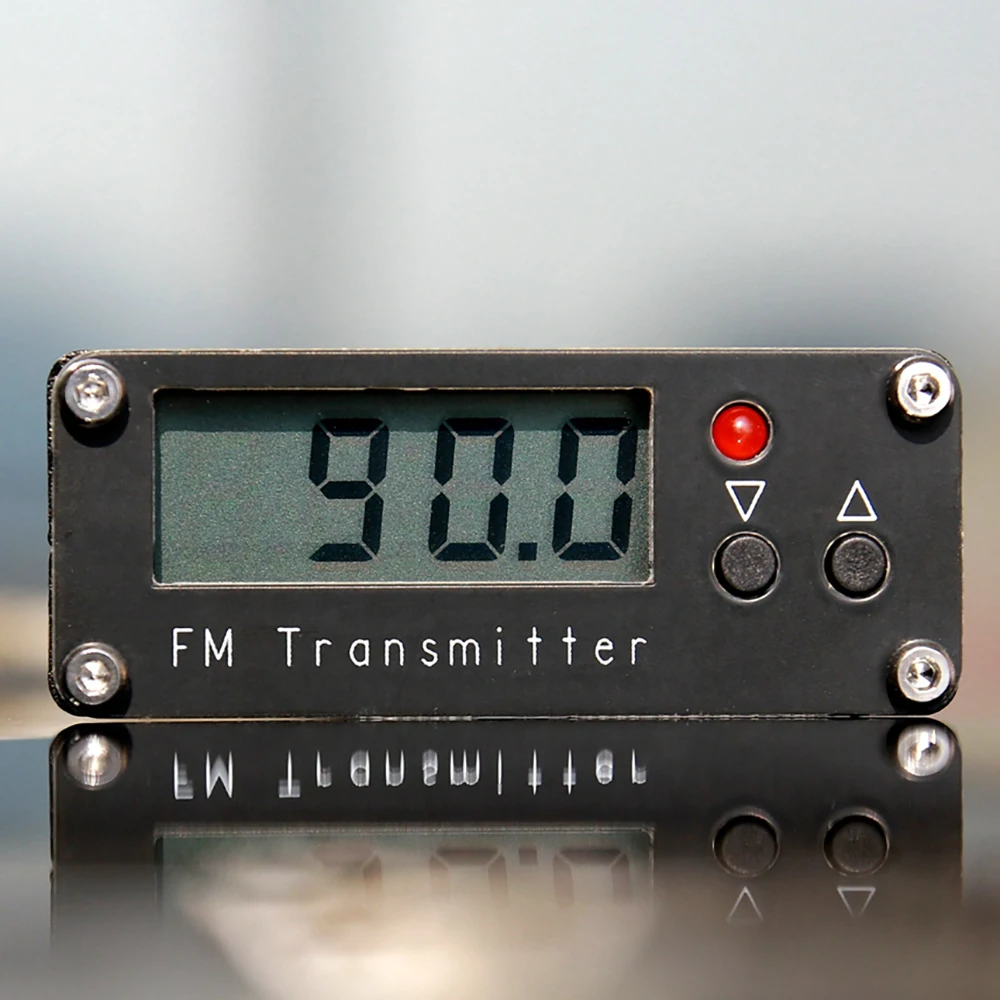
0.5W 500mW Output 76-108MHZ 2000m 2KM FM Stereo Transmitter with LCD Digital Display
In stock
-
All orders are dispatched the next 3 business days!
-
We will beat any price. We back all products with a 1 year guarantee.
Order in the next 0 hours 0 minutes to get it by /02/2026
Couldn't load pickup availability
Guaranteed Safe Checkout
2km 0.5W FM transmitter 500mW digital display Stereo FM Transmitter 76-108M Audio signal USB TYPE-C FOR DSP Radio broadcast Campus Radio Station English listening
Please note:
1. This is a transmitter, IT not a radio
2. This transmitter cannot be directly inserted into the microphone.
3. The transmitter does not have a battery inside and requires external power supply.
4. This is a transmitter and cannot be used to enhance radio signals. If you want to enhance the signal,
please buy an outdoor antenna or antenna amplifier.
Output frequency: frequency adjustable, working range 76~108MHz, 1MHz or 0.1MHz in steps, a total of 320 transmission frequencies, with memory function.
Output power: 10-500mW (0.01-0.5W) @ 88-108MHz.
Receiving device: A regular radio that can receive FM broadcasts can effectively receive the signals emitted by this transmitter.
Display method: LCD display, displaying the current transmission frequency. Please refer to the manual for details. FM transmission antenna production data is included, and it has been tested that this transmitter can reach a distance of 2000 meters in open areas.
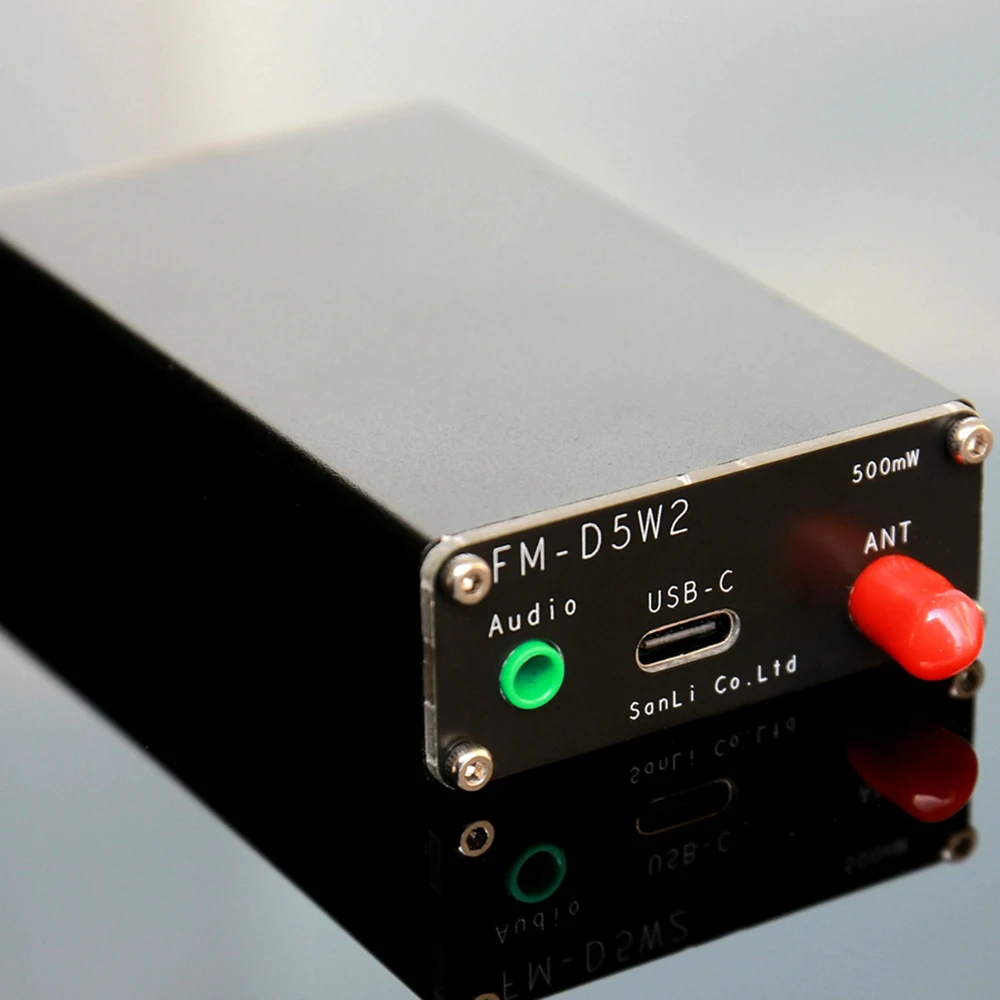
Power supply voltage: 5V USB-type-C (power supply and USB type-C power cord need to be provided by oneself)
Power supply current: 500mA
Input signal: audio stereo, 3.5mm interface standard signal-to-noise ratio: 63dB 0.05% THD
Weight: 120g (120g)
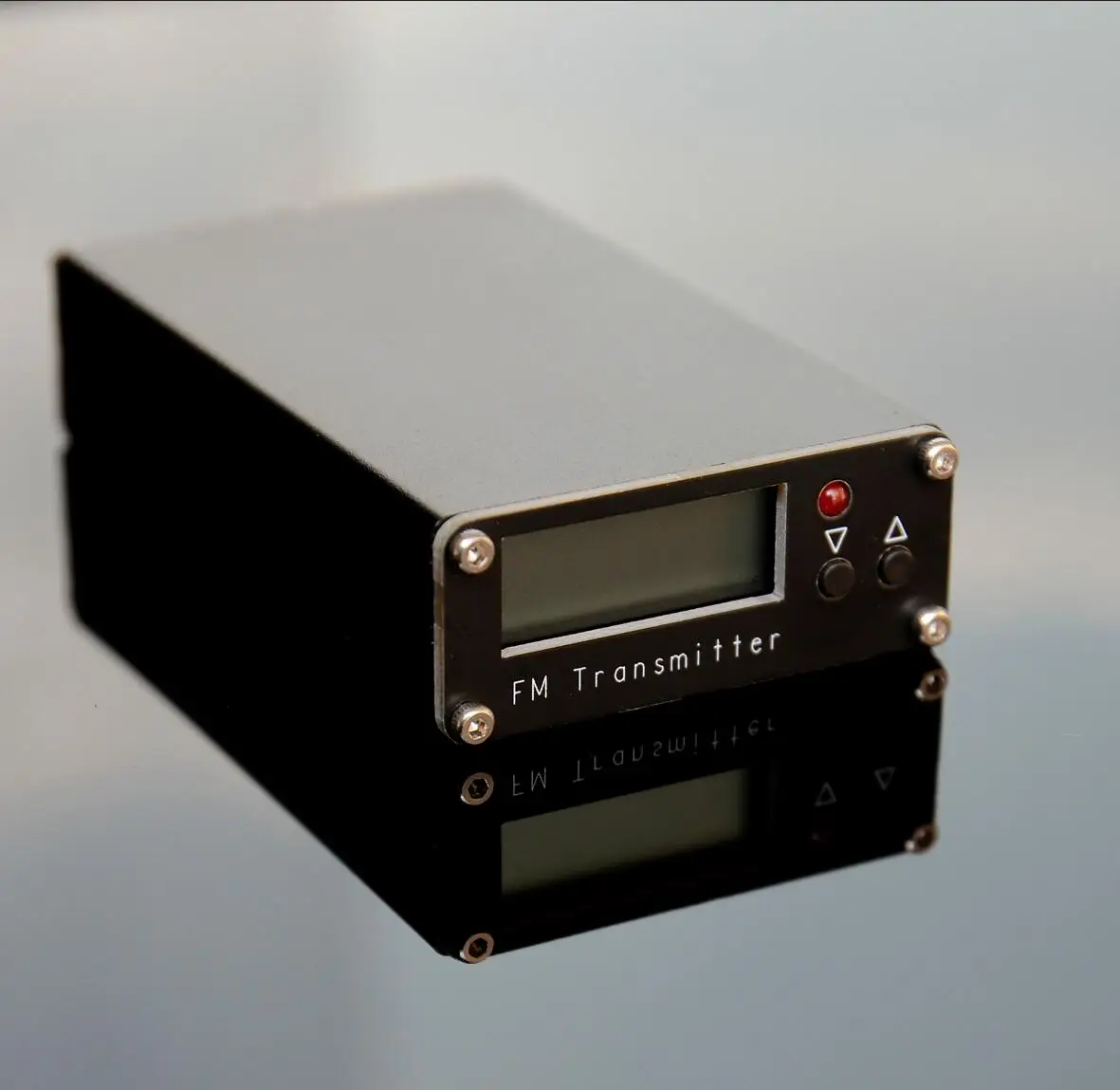
Size: 8.5x5x2cm,
Packaging includes
1X Only FM transmitter,
Antenna AND POWER not included


Q&A
Q: What is this thing for?
A: This is an FM transmitter. It can be seen as an FM small radio station, which inputs audio signals and outputs FM high-frequency signals, which are transmitted into the air through an antenna. People in the distance use radios to receive.
Q: Is this transmitter stereo sound? A: Yes, this is a stereo transmitter.
Q: Is there a battery inside the transmitter?
A: The transmitter does not have a battery inside and requires external power supply. Logistics and courier companies will restrict the transportation of products with built-in batteries.
Q: How to power the transmitter?
A: The transmitter uses 5V DC power supply, and the power interface is USB Type C specification. The current consumption is approximately 200mA. If a low-quality power supply is used, it may cause the transmitter to malfunction or the transmission quality to deteriorate, and the radio end may receive obvious noise.
The power supply voltage requirement is 4.8-5.5V. Exceeding this range can cause abnormal operation or even damage to the transmitter. Please be careful!
Q: Can the transmitter use a microphone?
A: The transmitter cannot be directly plugged into the microphone. If a microphone amplifier is used, the amplified microphone signal can be input to the transmitter.
Q: Can a dummy load be connected to the antenna port of the transmitter to replace the antenna?
A: No, the fake load is a pure resistor that will absorb the signal output by the transmitter, and the transmitter will have no energy to emit into the air. By attaching a fake load to this transmitter and relying solely on the weak power leakage, the radio can receive the signal from this transmitter within one or two meters. Fake loads and antennas are two devices with opposite functions and cannot be used as substitutes.
Q: How to set the transmission frequency?
A: The transmission frequency can be adjusted by two buttons on the panel, which can be selected as a step to change the frequency in 1MHz or 0.1MHz steps. Stop pressing the button for 5 seconds, and the transmitter will automatically remember the current set frequency. The next time it starts up, it will automatically transmit at this frequency without the need to set the frequency again.
Q: How to adjust the transmission power?
A: Enter the power setting mode by long pressing the up button, and set the transmission power by pressing the up and down buttons. The transmission power can be set between 10mW and 500mW, with a total of 11 power levels. Press the button to stop for 3 seconds and automatically switch to frequency adjustment mode, saving the current transmission power. The next power on will automatically remember the previous transmission power and frequency.
Q: Can we really launch 2000 meters?
A: The transmission distance is directly related to the transmission power, propagation conditions, and antenna performance. The 2000 meter transmission distance is achieved under the condition of a 500mW transmission power, a full-size GP antenna installed on the 14th floor, and no obstruction between transmission and reception. The antenna is strictly adjusted through an antenna analyzer, and the standing wave at the transmission frequency is 1.2. After testing by the shop owner, the pole antenna equipped in the small shop can transmit one to two hundred meters in an open and unobstructed environment. The pull rod suction cup antenna purchased on Taobao can launch up to 1000 meters at the same launch position, which is a cost-effective choice. In addition, there is a full-size GP antenna on Taobao, which can be adjusted to reach a transmission distance of 2 kilometers.
Q: Can I directly connect the rod antenna to the transmitter?
A: Sure, but pay attention to one phenomenon: if you hear a beep or buzzing sound in the radio after using a rod antenna, it means it has been interfered with. At this point, this phenomenon can be alleviated or avoided by reducing the transmission power. If this interference persists, then the transmitting antenna can only be kept away from the transmitter and front-end audio source. An antenna is a radiator, and when the transmission power is high, it can cause interference to surrounding electrical equipment. Therefore, once it is found that your front stage cannot work under strong signals, you can only use a feeder to keep the antenna away from the transmitter and front stage, which can effectively avoid interference.
Q: Why can signals be received at+-0.1MHz near the receiving frequency point?
A: This is because the signal received by the radio is too strong, so moving the radio away from the transmitter will eliminate this phenomenon.
Q: Why does my radio feel interfered and its sensitivity decrease when it receives broadcasts from other frequencies while the transmitter is working?
A: The radio works under strong transmission signals near the receiving frequency and will be suppressed. At this point, it is necessary to reduce the transmission power or keep the radio away from the transmitter to reduce the degree of suppression by the strong station. High end radios have a large number of filters at the front end to enhance their ability to resist suppression.
Q: What is the transmitter audio input interface like?
A: The input should use a standard 3.5mm audio interface, and the input volume should be appropriate. In the evaluation area, a friend's input is too large and obviously distorted. The volume should be reduced to achieve the final effect of general FM radio quality.
Attention: This transmitter does not support microphone input!.
Q: What is the transmitter antenna interface like?
A: The transmitter antenna interface is SMA specification, with external threads and internal holes. The corresponding antenna side requires the use of connectors with internal threads and pins.
Description
Description
2km 0.5W FM transmitter 500mW digital display Stereo FM Transmitter 76-108M Audio signal USB TYPE-C FOR DSP Radio broadcast Campus Radio Station English listening
Please note:
1. This is a transmitter, IT not a radio
2. This transmitter cannot be directly inserted into the microphone.
3. The transmitter does not have a battery inside and requires external power supply.
4. This is a transmitter and cannot be used to enhance radio signals. If you want to enhance the signal,
please buy an outdoor antenna or antenna amplifier.
Output frequency: frequency adjustable, working range 76~108MHz, 1MHz or 0.1MHz in steps, a total of 320 transmission frequencies, with memory function.
Output power: 10-500mW (0.01-0.5W) @ 88-108MHz.
Receiving device: A regular radio that can receive FM broadcasts can effectively receive the signals emitted by this transmitter.
Display method: LCD display, displaying the current transmission frequency. Please refer to the manual for details. FM transmission antenna production data is included, and it has been tested that this transmitter can reach a distance of 2000 meters in open areas.
Power supply voltage: 5V USB-type-C (power supply and USB type-C power cord need to be provided by oneself)
Power supply current: 500mA
Input signal: audio stereo, 3.5mm interface standard signal-to-noise ratio: 63dB 0.05% THD
Weight: 120g (120g)
Size: 8.5x5x2cm,
Packaging includes
1X Only FM transmitter,
Antenna AND POWER not included


Q&A
Q: What is this thing for?
A: This is an FM transmitter. It can be seen as an FM small radio station, which inputs audio signals and outputs FM high-frequency signals, which are transmitted into the air through an antenna. People in the distance use radios to receive.
Q: Is this transmitter stereo sound? A: Yes, this is a stereo transmitter.
Q: Is there a battery inside the transmitter?
A: The transmitter does not have a battery inside and requires external power supply. Logistics and courier companies will restrict the transportation of products with built-in batteries.
Q: How to power the transmitter?
A: The transmitter uses 5V DC power supply, and the power interface is USB Type C specification. The current consumption is approximately 200mA. If a low-quality power supply is used, it may cause the transmitter to malfunction or the transmission quality to deteriorate, and the radio end may receive obvious noise.
The power supply voltage requirement is 4.8-5.5V. Exceeding this range can cause abnormal operation or even damage to the transmitter. Please be careful!
Q: Can the transmitter use a microphone?
A: The transmitter cannot be directly plugged into the microphone. If a microphone amplifier is used, the amplified microphone signal can be input to the transmitter.
Q: Can a dummy load be connected to the antenna port of the transmitter to replace the antenna?
A: No, the fake load is a pure resistor that will absorb the signal output by the transmitter, and the transmitter will have no energy to emit into the air. By attaching a fake load to this transmitter and relying solely on the weak power leakage, the radio can receive the signal from this transmitter within one or two meters. Fake loads and antennas are two devices with opposite functions and cannot be used as substitutes.
Q: How to set the transmission frequency?
A: The transmission frequency can be adjusted by two buttons on the panel, which can be selected as a step to change the frequency in 1MHz or 0.1MHz steps. Stop pressing the button for 5 seconds, and the transmitter will automatically remember the current set frequency. The next time it starts up, it will automatically transmit at this frequency without the need to set the frequency again.
Q: How to adjust the transmission power?
A: Enter the power setting mode by long pressing the up button, and set the transmission power by pressing the up and down buttons. The transmission power can be set between 10mW and 500mW, with a total of 11 power levels. Press the button to stop for 3 seconds and automatically switch to frequency adjustment mode, saving the current transmission power. The next power on will automatically remember the previous transmission power and frequency.
Q: Can we really launch 2000 meters?
A: The transmission distance is directly related to the transmission power, propagation conditions, and antenna performance. The 2000 meter transmission distance is achieved under the condition of a 500mW transmission power, a full-size GP antenna installed on the 14th floor, and no obstruction between transmission and reception. The antenna is strictly adjusted through an antenna analyzer, and the standing wave at the transmission frequency is 1.2. After testing by the shop owner, the pole antenna equipped in the small shop can transmit one to two hundred meters in an open and unobstructed environment. The pull rod suction cup antenna purchased on Taobao can launch up to 1000 meters at the same launch position, which is a cost-effective choice. In addition, there is a full-size GP antenna on Taobao, which can be adjusted to reach a transmission distance of 2 kilometers.
Q: Can I directly connect the rod antenna to the transmitter?
A: Sure, but pay attention to one phenomenon: if you hear a beep or buzzing sound in the radio after using a rod antenna, it means it has been interfered with. At this point, this phenomenon can be alleviated or avoided by reducing the transmission power. If this interference persists, then the transmitting antenna can only be kept away from the transmitter and front-end audio source. An antenna is a radiator, and when the transmission power is high, it can cause interference to surrounding electrical equipment. Therefore, once it is found that your front stage cannot work under strong signals, you can only use a feeder to keep the antenna away from the transmitter and front stage, which can effectively avoid interference.
Q: Why can signals be received at+-0.1MHz near the receiving frequency point?
A: This is because the signal received by the radio is too strong, so moving the radio away from the transmitter will eliminate this phenomenon.
Q: Why does my radio feel interfered and its sensitivity decrease when it receives broadcasts from other frequencies while the transmitter is working?
A: The radio works under strong transmission signals near the receiving frequency and will be suppressed. At this point, it is necessary to reduce the transmission power or keep the radio away from the transmitter to reduce the degree of suppression by the strong station. High end radios have a large number of filters at the front end to enhance their ability to resist suppression.
Q: What is the transmitter audio input interface like?
A: The input should use a standard 3.5mm audio interface, and the input volume should be appropriate. In the evaluation area, a friend's input is too large and obviously distorted. The volume should be reduced to achieve the final effect of general FM radio quality.
Attention: This transmitter does not support microphone input!.
Q: What is the transmitter antenna interface like?
A: The transmitter antenna interface is SMA specification, with external threads and internal holes. The corresponding antenna side requires the use of connectors with internal threads and pins.
Item Specifics
Item Specifics
Share
Have a Question?
✲
Precision fit for your specific vehicle model.
Collection slider
Give customers details about the collection or content on the template.